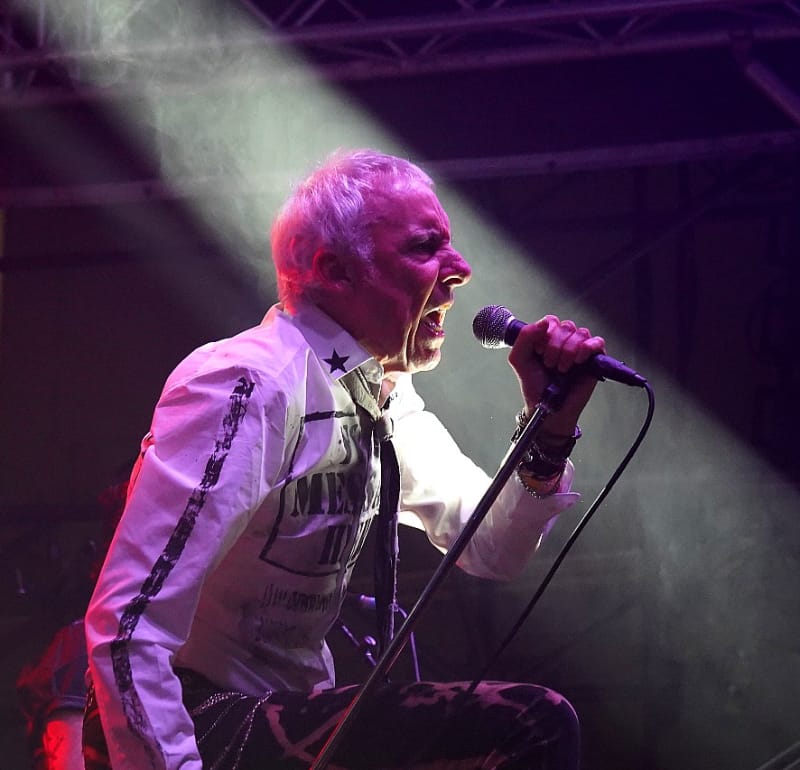
 John Greenwood photo.
The Damned, The Adverts and Generation X. What do they have in common? The UK music media savaged their second albums.
The Damned broke up, then got back together and they're the Johnny Walkers (or the Undead) of the punk movement. Generation X broke up while their lead singer took their last single and turned it into a huge hit. Billy Idol is the blonde undead of the punk movement.
The Adverts ... well, they broke up. The singer, TV Smith, was prevented from continuing using the name (even though it was his name and the band was essentially him and the bass player, FFS) ... and cue an incredible self-determinism.
On later listens, the second LPs by all of the above deserve far better than the “it's different” kicking they received. And to this day, TV Smith still can't let go of his creative imperative.
Alright, let's go back again. The Clash, The Damned, The Sex Pistols, The Stranglers, The Buzzcocks ... everyone's heard of them. Their shadows loom large in the aftershock of punk. Their songs appear on adverts and in films and on the telly.
But The Adverts seem to have escaped all that. Here's a prophetic lyric from that first LP, “Crossing The Red Sea with The Adverts”:
Hang on - if you hang on to faith and meekness
Before long, it's power for the strong
It's twisted into something evil
Something wrong
The song is “New Church”, and the lyric is as much about the trajectory punk and new wave was heading, as it is about either religion or political power. Needless to say, sometimes it takes a few years before a band come to prominence - Pulp would be a good example, or Primal Scream. So: TV Smith's songs are bloody good, relevant, and well worth your investigation. And if you have to come at them via The Adverts from nearly 50 years ago... so be it.
I-94 Bar: Apologies in advance for dwelling so much on the distant past ... so I'll start with the present... What are you reading - what books are getting your attention at the moment?
TV Smith: At the moment I’m writing a new album so I’m not reading. No time.
I-94 Bar: Do you reread books? What would be five of your favourites?
TV Smith: I’m really not good at list questions so I won’t be answering those. Apologies! I can agonise for days over a Top 5 and still not be happy with my choices so we’d be here until 2027 if I start…
I-94 Bar: : Your first band was Sleaze. MessedMag website quotes you describing your first band as "a glam band I formed in art college. We put up gigs in local town halls and school halls. I still have a tape of one of these concerts when we didn’t hear anyone clapping. There was no response whatsoever after the songs". What songs were you playing?
TV Smith: I do still have that live cassette - but we also went into a local studio and recorded an album. It cost me £36 for studio time, and we pressed up 50 copies for family and friends. I always felt kind of embarrassed about it, but a few years ago Sing Sing Records in the USA asked me if they could put out a limited edition on vinyl, and when I listened to it again I felt really proud of it.
To my amazement the re-release sold out straight away and got some really good reactions. The songs were generally long, slowish glam epics, but there was a hint of what was coming - for example, one song called “Dum-de-Dum” predicted the whole punk “boredom” obsession. Also there was a song called “Listen Don’t Think,” which I reworked to become “Newboys” on “Crossing The Red Sea.”
I-94 Bar: What prompted you to form Sleaze? How long did it run for?
TV Smith: I’d already had a band at school. My first gig was in the school assembly hall after the tables had been cleared away from lunch. When I went to art college the next year, the first thing I did was look around for people who could be in a band with me. I put all my energy into that and let the academic agenda slip. When the college year ended, the band ended too. I moved back to my home town in rural South West England and started to become aware of the first rumours of interesting things happening in London, and realised that was where I was going to have to go if I wanted to get my music heard.
I-94 Bar: :Do feel free to give in to the temptation to put the tape up on Bandcamp …?
TV Smith: I’m pretty sure a lot of that Sleaze album has been uploaded to YouTube already if you hunt around for it. In fact…here you go.
I-94 Bar: The Adverts formed before the huge response to The Sex Pistols on Bill Grundy's show; so, what prompted you to form The Adverts, and write your first songs with The Adverts in mind?
TV Smith: When I write I don’t tend to think about what band is going to end up playing them, I’m just trying to express myself. There was no Adverts when I started writing the songs that would end up being played by The Adverts. Gaye had expressed an interest in learning to play the bass guitar, so I worked out the bass lines of the songs I had already on the bottom four strings of my acoustic guitar and we started rehearsing as a duo.
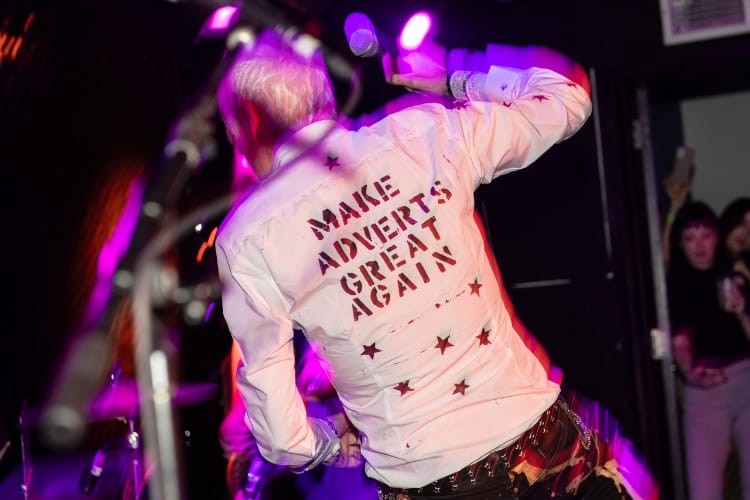
We then moved to London in mid 1976 intending to find musicians there to complete the band. That took some time, and the band was only really ready just before the end of the year. Only a few weeks later we played our first gig at the Roxy, in January 1977.
I-94 Bar:: Your words have always had a powerful impact on me; there's an innate straightforwardness to them - I could be wrong, but I don't think writing like this happens out of the blue. Was there about your background which allowed you to be so precise - and so emotional and caustic?
TV Smith: I always loved words, and started writing poetry at school. That just gradually evolved into songwriting when I started hearing melodies in my head that would fit the words. Straight away I could feel the additional power the words had when they were matched with a tune.
I started learning to play the guitar just to find a way to fit music to the lyrics initially, but the words are still the most important thing for me. I never felt I was a natural guitar player, but I needed it to write the songs. I’ve got better at guitar over the years but it’s quite a relief to me to do occasional band gigs where I only have to sing.
I-94 Bar: Was writing lyrics difficult initially - and what came first, words or music?
TV Smith: As I say, words are the thing that count for me. But I love the process of fitting together the words and the tunes, it’s some kind of strange alchemy. Often when I finish a new song I look back and think, how the hell did that happen?
I-94 Bar: Your sense of rhythm with your lyrics always struck me as unique - your voice and what you sing are almost another instrument, sometimes cutting across the music. How did you develop this?
TV Smith: I think it’s a lot to do with the fact that I always write on acoustic guitar, and the songs always have to work in that format. So the rhythm and delivery of the vocals take on a lot of weight, they have to do the work of all the other instruments as well as carrying the message. I always feel you should be able to remove all the other instruments and the vocal line would still work. I’m not planning an A Capella album though, don’t worry.
I-94 Bar: Of the already powerful cultural undergrounds in 1976; at this remove it seemed more likely that 'something would burst' in the USA; but the Grundy Inciden' changed the world. At the time, did you see it on TV? What was punk before the Grundy Incident?
TV Smith: I didn’t see the programme. I hardly watched any TV at the time, still don’t. It seemed such a peculiarly English thing though, that people could get so upset about something so trivial. I couldn’t imagine it would have that much impact in America. Society needed a shake up and that seemed to do it, but it did have a very divisive effect - suddenly the punks were the enemy. Before we’d just been 50 or 100 or so people gathering at the Roxy Club every now and then, like a kind of private clique. After the Grundy episode, suddenly the whole world was watching.
I-94 Bar: What was the immediate result - for yourselves and for the cultural underworld in UK?
TV Smith: It threw a spotlight on the punk scene that kind of cornered us into being anti-establishment, anti-everything, and started the slip towards negativity that soon characterised punk. I didn’t like that. I thought we were a positive movement with something to say.
I-94 Bar: I've heard punk described, simply, as ''ngry rock and roll'. I've never agreed, although punk's platform is dissatisfaction. But 'punk' has gone through so many different definitions and perceptions, yet as a style and an attitude, it's still here. Why do you think that is? Is it more relevant now than, say, during the 1990s?
TV Smith: I always felt it had nothing to do with rock and roll, certainly not in the song structures anyway. I think the attitude of a lot of 50’s rock’n’rollers was more punk than ‘77 punk, but the sound and style of “our” punk was unique because it didn’t have that blues-based sound.
The few punk bands that borrowed from blues-based rock’n’roll sounded kind of old-fashioned to me, I never felt they were "proper" punk. Anyway, it wasn’t so much the style as the content that mattered. Most of the punk bands were writing about things that were important to them, the lyrics were grounded in reality and experience and spoke directly to their audience. That actually never ages and that’s why it’s still relevant now.
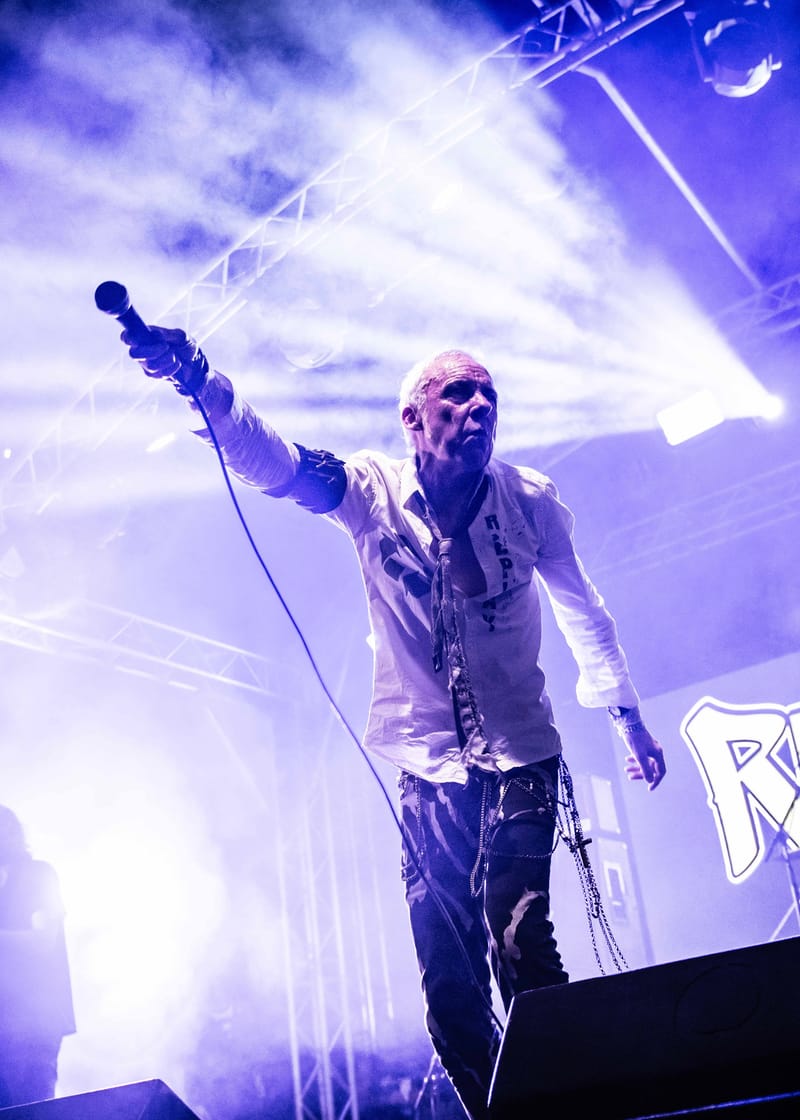
I-94 Bar:"Safety In Numbers" criticised the then New Wave scene, especially for its apathetic attitude to initiative and will ("It's the latest thing to be nowhere/ You turn into the wallpaper") - could you explain what it was like then - and how things have altered?
TV Smith: By the summer of 1977 there were an awful lot of people getting involved with punk who didn’t really seem to understand what the early punks had been trying to create. They were more interested in the version of punk that they’d read in the newspapers instead of being independent and thinking for themselves - the very antithesis of what punk was supposed to be about. “Safety In Numbers” was a call against complacency.
I-94 Bar: Looking at the list of bands that played at The Roxy in early 1977 ... some became absolutely huge, others didn't, and others still persevere. What were the differences in attitudes? Was it obvious that some wanted to make it? Which bands stood out for you - excellent, baffling ...
TV Smith: I loved a lot of the bands from the original wave of punk rock, to be honest. It was just all so refreshing from what had been happening in the music scene up to then. Suddenly bands were full of energy and inventiveness, and for a while at least they all sounded so different from each other. You can’t really make any comparisons between, say, The Damned, Clash, Sex Pistols, Buzzcocks, Jam, Stranglers, Adverts, in terms of music, lyrics or how they looked and acted on stage.
Sadly, within a year or so it had all become very formulaic. In answer to your other question, I think in a way all the bands wanted to “make it” somehow - that was part of what being in a band was all about. I think, which ones became successful had a lot to do with what label they were on and how much support they had from the music business.
The Clash, for example, were on CBS, had huge industry backing and went from strength to strength. The Adverts, on the other hand, were on a subsidiary of USA label ABC, called Anchor Records. ABC decided they didn’t like this English punk thing, withdrew their financial backing and closed down Anchor, leaving us with a hit single but no label. That was a bit of a hammer blow at that point in our development and we never really recovered.
I-94 Bar: You were both Stooges fans - what was it like touring with The Damned - and also Iggy - way back then? Or do I have to buy your books? Are they still available?
TV Smith: I did six volumes of tour diaries, but let them go out of print. They were too heavy to carry around for merch, haha. But they were really about the trials and tribulations of touring as an independent solo musician. Plus jokes. I didn’t talk much about the “old days” in them. But the tours with both the Damned and Iggy were significant for me.
The Damned because punk in the UK was at an absolute peak in the summer of ’77 and both bands were on top of their form and competing to blow each other off stage. All the gigs were full and both the audiences and the bands were excited and out to have a great night every night.
Iggy was important because he had been a very important figure in my musical development. It’s probably not an exaggeration to say “Raw Power” changed the way I looked at music, just its sheer ferocity was something I didn’t realise was possible up to hearing it. That combined with the smartness of the lyrics.
I-94 Bar: Who are your greatest inspirations - and why? (I'm assuming Iggy, again, would be one, but …)
TV Smith: For sure, Iggy was important. But long before that I was a huge David Bowie fan. Those words, those tunes, that image! I’d already been listening to him before the whole Ziggy Stardust phenomenon broke, but after that it went to a whole new level. The consistent standard of the songwriting was just incredible.
I saw the Ziggy show at a matinee performance at Torquay Town Hall while I was at art college and I’d never seen a live gig like it, it was a completely different experience to any show I’d seen before.
I-94 Bar: You've been playing steadily since 1977. Where do you find the stamina? I mean, you're a vigorous performer…
TV Smith: I love what I do, I love getting the chance to play my songs to people. That’s what gives me the energy to keep going.
I-94 Bar: I think your observations on the world seem to come from "outside" - of people trying to make sense and find stability in an unstable and dangerous environment. The Tate describes "outsider art" as "art that has a naïve quality, often produced by people who have not trained as artists or worked within the conventional structures of art production". If it weren't for that patronising "naïve quality" remark, 'outsider art' would seem to describe what you do. What do you think?
TV Smith: Well, I like being an outsider. I’ve never considered "inside" a good place to be; it reeks of conventionality and complacency. I think most of my audience are outsiders too, at least in the sense they get the message. Outside is the new inside.
I-94 Bar: I've noticed that, apart from your own tour diary books, there are some older books on philosophy by TV Smith (AKA Thomas Vernor Smith) - have you read any? What was your reaction when you discovered him?
TV Smith: I didn’t even know of the “other” TV Smith until a few years ago when someone sent me a photo of his gravestone. That was a bit weird.
I-94 Bar: A lot has happened since The Adverts broke up. But there's still an uncaring England. Nearly 80 years ago, Winston Churchill said, "Many forms of Government have been tried, and will be tried in this world of sin and woe. No one pretends that democracy is perfect or all-wise. Indeed it has been said that democracy is the worst form of Government except for all those other forms that have been tried from time to time …"
Twelve years ago, you were singing, "My voice never gets heard / Despite my vote / This is the bone of contention / Sticking in my throat"... Do you believe in democracy? Or is it 'the least worst form of government', do you think? (It certainly seems that the goal of those seeking power is to load the dice.)
TV Smith: I do absolutely believe in democracy and all we can do is try and make it work better. We’re fighting enormously powerful people and concerns who are able to manipulate the media and quite literally make right appear wrong. When Fascism is made to appear attractive you know we’re in trouble. To go down that route is unthinkable.
I-94 Bar: We're living in an era of enormous inequality, greed and selfishness. Yet these human traits have been with us forever, it seems. What gives you hope for the future of us humans?
TV Smith: Well, we’re still here and still fighting injustice, and still leading productive and fulfilling lives. We’re even attempting to enjoy ourselves. I really believe the old adage, “where there’s life there’s hope.” I’m not looking for or expecting a perfect world, but I do still feel we’re slowly, painfully slowly, evolving into better humans. Not giving up hope is the key - when it’s “two steps forward, one step back” we need to concentrate on the forward, not the backward.
I-94 Bar: I was in London in mid-1967, late 1978, in 1998, and a year ago - the one thing on London's streets which horrified me as a tot in 1967, and again in 1978 and 1998, and again last year - was the constant appalling state of the homeless. Here in Australia, we have the luxury of being able to point to faults with government policies over the last 10 years, and slow-moving change, for the cause in our increase in homelessness. But in the UK, it seems to be ... something which cannot be changed, and seems to have been there forever. Australia remains a fortunate country - but what is UK?
TV Smith: The absurd thing is, previous Conservative governments have completely denied the fact there was any homelessness, even though you only had to walk the streets of any major city to see it with your own eyes. What we have now is appalling, and a complete failure of government to show the necessary compassion for the less fortunate people in society, but it’s much in line with the rest of the world.
I travel a lot and see it everywhere. You kind of expect it in places like South America, but I was completely shocked when I saw the amount of homelessness in the USA when I went there last year, considering that’s supposed to be the greatest most civilised county in the world.
I-94 Bar: Could you explain a little of your songwriting process, as it now is?
TV Smith: Keep your eyes open, write what you see, turn it into poetry.
I-94 Bar: How does it feel to be singing songs you wrote in 1977 alongside songs you wrote last year? How would you describe your creative and political thread?
TV Smith: It makes perfect sense to me to bump songs I wrote in 1977 against brand new songs when I play live. I feel a very strong thread between everything I’ve written from the Adverts onwards. They all come from the same creative place. When I sing the Adverts songs now they come back to me as fresh as the day they were written.
I-94 Bar:: "Handwriting" is your latest LP, and it seems to be significant for you - could you tell us what you were thinking as you wrote the songs? Were they written all at the same time? Is this a new approach?
TV Smith: I was just looking at the way the world was going and trying to capture it. Quite a few of the songs are “what if” themes, like the title track - what if things carry on as they are without anyone doing anything to stop it, what kind of future can we expect? The protagonist is living in an Orwellian world where all his freedom has been taken away and everything he does is followed and tracked by the Establishment - except what he writes by hand. That’s his route to freedom.
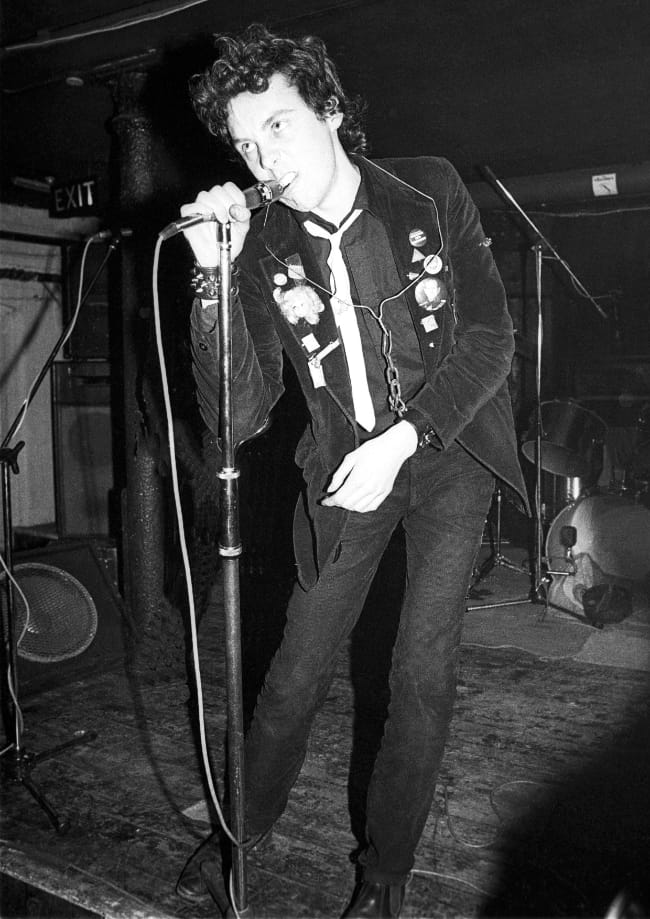 Back in 1977...
Another song is about the climate crisis and how it’s almost too late to stop it, “One Minute To Midnight.” I wrote the songs more or less in one run. This has been my way of writing over the past few years, ever since covid and lockdown really. In that period I suddenly found all my gigs cancelled and had the freedom to write with no distractions.
I started writing about the whole covid experience just to document what was going on, and wrote a whole album “Lockdown Holiday” in a very short time, virtually a song every couple of days. I re-learnt a lot about songwriting from that, just to let the ideas flow and not to overthink things. The spontaneity is very important.
I-94 Bar: What instrument did you first learn to play?
TV Smith: Acoustic guitar.
I-94 Bar: What was your first guitar - and do you still have it?
TV Smith: I borrowed my first guitar from my local Sunday School. I think I was supposed to learn hymns on it or something but never did. I don’t know what happened to it - I don’t recall ever giving it back.
I-94 Bar: Favourite guitar, and why?
TV Smith: I’m not a guitar nerd. I play a slimline acoustic guitar made by my brother who is a luthier with his own company Brook Guitars. It’s the only acoustic guitar I own, apart from an earlier version he made which looks exactly the same. He had to build me a new improved version because I was endlessly getting refused boarding on planes with the guitar so he made a new one with a neck that unscrews so I can fit it in a rucksack in two pieces and take it on board as hand luggage.
I-94 Bar: I won't ask how many guitars you have, but what makes you buy a new guitar?
TV Smith: You can ask. I only have two other guitars: an electric Telecaster copy and a cheapo bass guitar. I bought them second hand to play on my album “Coming Into Land” a few years ago but never actually use them now. I only ever write and play on the acoustic.
I-94 Bar: What pedals do you use - what's your favourite?
TV Smith: I don’t use any pedals.
I-94 Bar: What instruments/ pedals do you regret parting with or never buying, or have been lost, stolen, destroyed …?
TV Smith: I’ve seen both acoustic guitars broken a number of times - smashed in transit on aircraft, or dropped at gigs by careless roadies. It’s always heartbreaking but luckily it’s always been possible to fix them. They bear a few war wounds but sound as good as new.
I-94 Bar: You've collaborated with a lot of people over the years - are there any who standout for skill or enjoyment?
TV Smith: I’ve enjoyed all the collaborations I’ve done very much, and I’ve worked with a lot of good people over the years - too many to mention really. Probably the standout one for me in Europe was making an album with German superstars Die Toten Hosen as my band.
I’d always made my records with a lot of financial constraints and without label support, so the sound quality varied from album to album, as well as having differing line-ups. The Hosen donated a top quality studio and producer, as well as their own time and talents as musicians, and we made a “Best Of” record of some of our favourite songs from my back catalogue with a consistent sound and quality.
I-94 Bar: Briefly, back to the past, I've always wondered (and, you don't have to answer this one) - what was the situation with Howard and Laurie? Was it differing expectations?
TV Smith: It was a different situation with each of them. Laurie was quite disruptive, and he and Gaye just couldn’t get along, which was a very awkward situation for me as Gaye was my partner at the time so it was difficult to be a peacemaker. There were also a lot of drugs flying around with various members of the band, which didn’t help.
The breaking point came when we were on tour in Ireland and Laurie went down with Hepatitis, which meant he had to be isolated in hospital. The band had a lot of commitments coming up, including a very important TV appearance on BBC’s “Old Grey Whistle Test,” which was a game changer at the time, so we went ahead and got another drummer in.
Laurie always resented it, and to be honest I don’t blame him. We made it up eventually though. I saw him a few years ago when I played a gig in Iceland, which he’d made his home. I did an in-store performance in the afternoon and he and his son were the only people who turned up. I played to an audience of the two of them, plus the store owner, seated on a couch in front of me.
With Howard, I think he just got disenchanted with the lack of success. Even after a hit single and a well-received album we still weren’t making any money, it was just tour after tour, and grinding us all down. One day he just didn’t turn up to a rehearsal and we never saw him again. It was a shame - I like him a lot and really admired his guitar playing.
I-94 Bar: Many singers find it hard to do without a band. You’ve been walking out onstage with just a guitar for some time - what made you go this route, and was it difficult at first?
TV Smith: It was certainly difficult the first time. It was in the early 90’s and I was touring around with a band I called “Cheap.” They were a great band, but we were frankly getting nowhere. A friend of mine, ranting poet Attila The Stockbroker, came up to me after a poorly-attended London gig and said, “Tim, you write the songs, you play guitar - why don't you play a solo gig? You can support me at my next one.”
The thought terrified me, but I gave it a go and instantly became hooked. The thrill of performing those songs with no safety net, just me and the guitar and the audience - it’s hard to describe. There and then I decided that was going to be my focus in the future.
I-94 Bar: You look like you pour everything you have into your shows - what can we expect in Australia?
TV Smith: Well, playing band shows is like my reward after the solo shows. It’s great for me to have the chance to put down the guitar and just sing, to put everything into the performance and vocals. I’m thrilled to be coming to Australia and I intend to be giving it 100%. I know the band will too. We plan to concentrate almost exclusively on Adverts songs and bring them to life in a way that fits with 2026, it’s going to be very intense.
I-94 Bar:: Five favourite reggae/ dub records?
TV Smith: I love reggae and dub!
I-94 Bar: Five favourite LPs?
TV Smith: Toooooo difficult.
I-94 Bar: Five favourite films?
TV Smith: As above.
I-94 Bar: Five favourite books?
TV Smith: As above.
I-94 Bar: Roxy Music, David Bowie, Iggy and the Stooges, Beatles or the Stones?
TV Smith: I’ll take them all please.
I-94 Bar:: Five favourite reformers?
TV Smith: Nice question! Which I can’t answer. “Reform” is the name of a new right wing “populist” party in Britain. Never has a name been so wrong.
* * * * *
I could've asked a pile more questions. But I thought I'd piled on so much that the man would take one look and recoil in horror. However - within 36 hours the answers were sitting in my inbox.
But it's the music which is the thing, not me poncing on about it. Here's that first LP again, and here's his website and where to procure recent releases.
TV SMITH'S ADVERTS
LIVE IN AUSTRALIA APRIL 2026
APR
2 - Young St Tavern Frankston
3 - The Tote Collingwood (w/Alien Nosejob)
4 - Barwon Club Geelong (w/ Handgrenade Hearts)
5 - Last Chance Rock'n'Roll Bar, Melbourne (matinee)
8 - Hamilton Station Newcastle
9 - Link and Pin, Woy Woy
10 - Lansdowne, Sydney
11 - La Las Wollongong -
(w/ Cammy Cautious and the Wrestlers)
Tickets