
- Details
- By Robert Brokenmouth
- Hits: 856
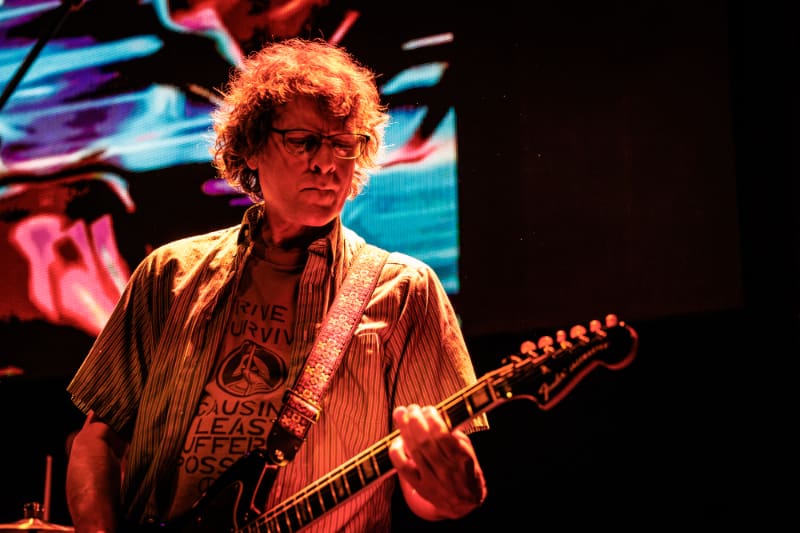 Steve Turner. Kerrie Geier photo.
You lucky Eastern Australian Coast gits. This October, Mudhoney return to Australia for their ninth tour. But they ain't playing Adelaide (or Perth.) Bastards.
Right, well, I figure that you know who Mudhoney are and they shouldn't need the likes of me to introduce them yet again.
It's interview time afor the band's guitarist Steve Turner and I am not interested in asking about "Sea**le" and "gru*ge" as I'm sure everyone's heard all about it by now. The band must be bored to death by answering the same questions over and over.
- Details
- By The Barman
- Hits: 917
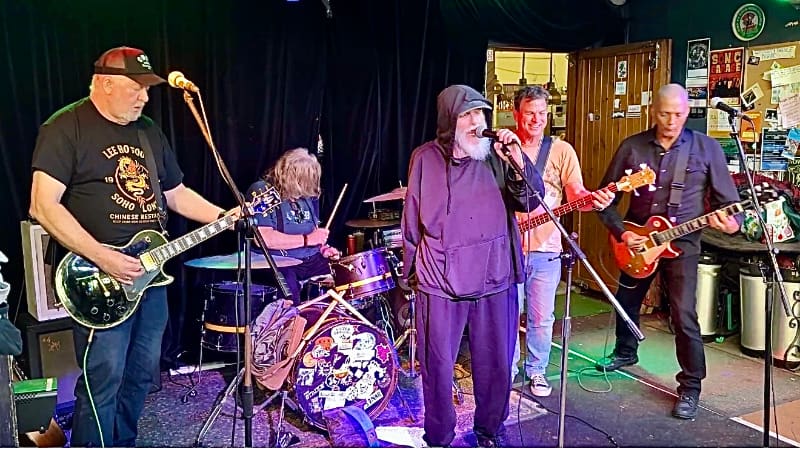 The reformed Panadolls (from left) Big Al Creed, Ash Thomson, Ken Archbold, Matt Bannerman and Phil Van Rooyen, at Link and Pin in Woy Woy.
For the second half of the 1990s, Dangerous Rock and Roll had an address on Sydney’s Northern Beaches and used the pseudonym The Panadolls.
Deriving their name from a prescription painkiller, The Panadolls were troublemakers in a crowded Sydney scene that had not yet been battered into submission by poker machines, over-regulated venues and changing tastes. They ran with like-minded peers ,the Celibate Rifles, Hellmen, Powder Monkeys, Asteroid B612 and Brother Brick, and pushed a brand of Detroit-tinged high-energy rock that was equal parts Dolls blues squawl and a Stooges-like attack, all channeled through an Oz Rock filter.
Any band with the guitar attack of Big Al Creed (ex-Dr Fruitworld, later to join the New Christs) and bassist-cum-frontman Ken Archbold (ex-Hellmen) had a distinct advantage. The Panadolls did not sit long in any genre and burned brightly for only five years. Their sole album, “From The Glitter To The Gutter”, and “From The Valley Of The Panadolls” EP went out of print soon after.
And now they’re back. Sorta. Latter-day drummer Ashley Thomson (ex-Kelpies, Roll Cage) has issued both digitally here, supplemented by an outtakes/rarities release called “Dirty Hits”. The Panadolls also reformed for two “don’t blink or you’ll miss them” shows in July, both outside hometown Sydney.
It all sounded like an excuse to corner Kenny Archbold and pose some hard questions. The Barman did the honours.
- Details
- By Robert Brokenmouth
- Hits: 679
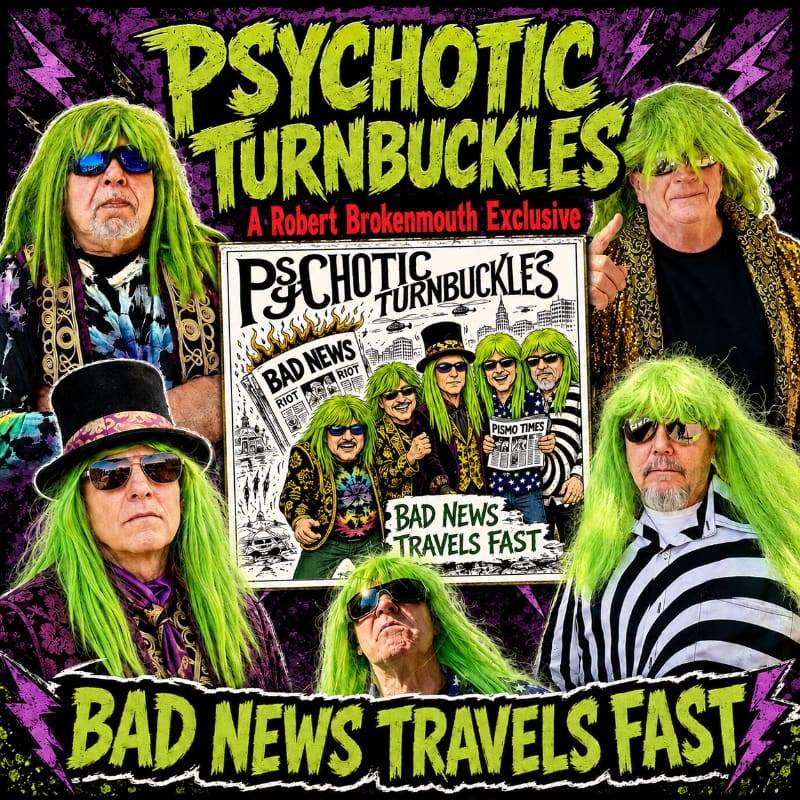
Thirty-two years after their last vinyl single on US label Sympathy For The Record Industry, Pismo Beach’s Undefeated Intercontinental Tag Team Rock and Roll Champions, Psychotic Turnbucles, are releasing a new 45.
“Bad News Travels Fast” b/w “Infected (With You)” is out on our own I-94 Bar Records on September 5 and will be launched in the band’s second home, Sydney, at Marrickville Bowling Club this Saturday.
A curious Robert Brokenmouth was so floored by this news that he decided to interrogate the Turnbuckles via email. Here’s the result of his exchange with Jesse The Intruder (vocals), The Grand Wizard (guitar), Count Forza (guitar), The Infliktor (bass) and Buddy “Bam Bam” Balam The Brooklyn Bruiser (drums).
- Details
- By Angela Evol
- Hits: 2602
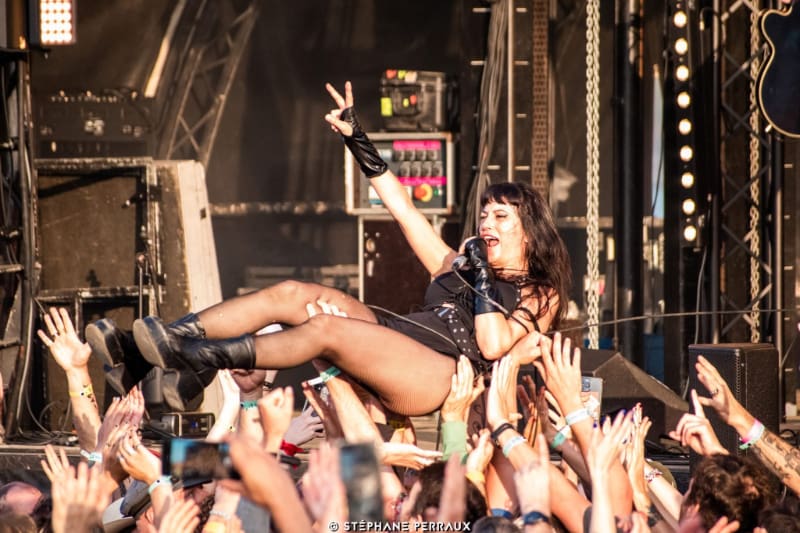 Nicole Laurenne communes with her people. Stephane Perraux photo.
US all-girl band The Darts have spent the last decade turning garage rock, Farfisa organ and relentless touring into one long, gloriously chaotic adventure - from festival stages and basement dives to boats, caves and a Scottish prison chapel.
Ahead of their first Australian tour in September, Angela Evol caught up with singer, songwriter and Farfisa-wrangler Nicole Laurenne to talk their album "Halloween Love Songs", The Damned, Sydney,"Peaky Blinders" and what happens if you stand at the back with your arms folded.
- Details
- By The Barman
- Hits: 786
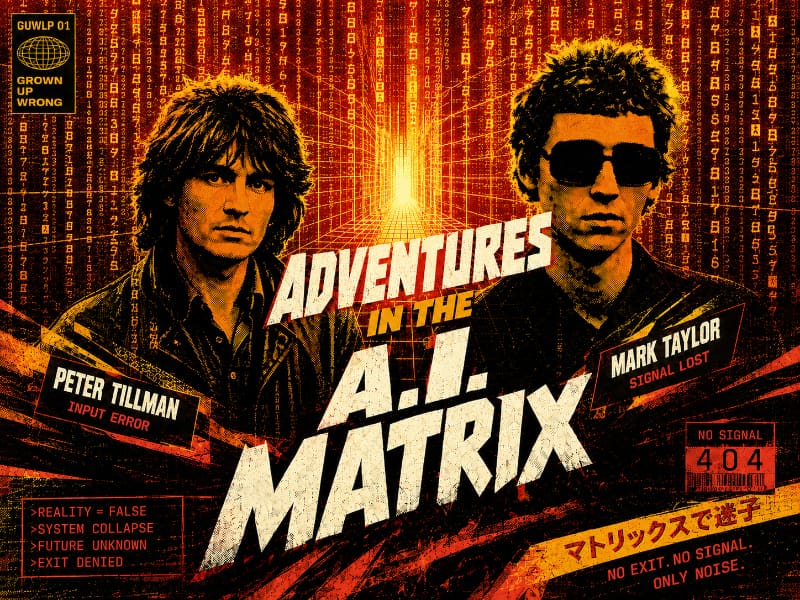 Credit: ChatGPT
You could have knocked down most fans of Australian ‘70s underground music with a feather in July when Lipstick Killers co-founders, guitarist Mark Taylor and singer Peter Tillman, stepped out of the shadows and released a rock opera.
To say the least, “The Shining Stone” - presaged by “The Lipstick Killers present” in the title - was a departure from the expected. Not glitter punk. Not acid punk, not garage rock. Instead, it was a massive sounding, full-blown orchestrated concept album, with full-blooded Three Tenor-style vocals and squalls of shiny, metallic guitars. All on CD and gorgeously packed with two glossy booklets of illustrtated narrative.
If you haven’t read our review we’ll put a spoiler out there right now: A.I. was heavily and uashamedly utilised in the making of “The Shining Stone”. Way to go to polarise opinions in these charged times. But there's lots more to discuss
Mark Taylor and Peter Tillman have a YouTube channel, The Bad Kynd, where they have been publishing images and garage punk songs - and a near-finished new Lipstick Killers album is in the wings.
The Barman invited The Lipstick Killers into the Bar and here’s the virtual e-mail exchange.
- Details
- By Robert Brokenmouth
- Hits: 733
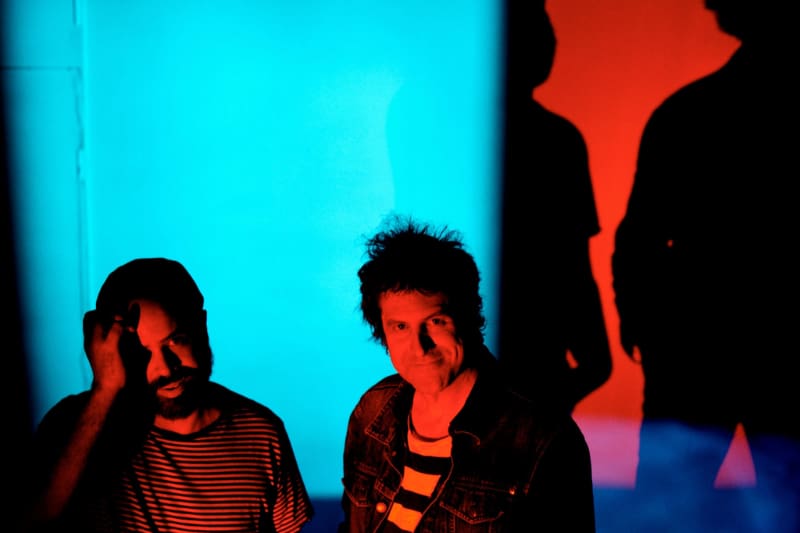
For many I-94 Barflies, Swervedriver , soon to hit Austraia for a seventh tour, are still a relatively new band. And the 1990s were not that long ago.
As you may know, Swervedriver is led by driving force, Adam Franklin (guitar and vocals); the band came to prominence from about 1990, after several previous bands had folded (including the very Stooges-heavy Shake Appeal). Swervedriver immediately got people's attention with a series of EPs featuring loud, feedback-y guitars courtesy Franklin and Jimmy Hartridge.
This approach to rock'n'roll usually creates what I think of as “chronic wet pants syndrome” with the movers and shakers in the record companies. In my limited experience, audiences, accustomed to lame, unadventurous slop, usually respond to feedback-soaked bands with hearty roars, too much alcohol and a blissful sense of being the top of their head being removed. In one previous interview, Franklin has described his glee at the sight of punters being "peeled off the back wall" in response to their live shows.
- Details
- By Robert Brokenmouth
- Hits: 1895
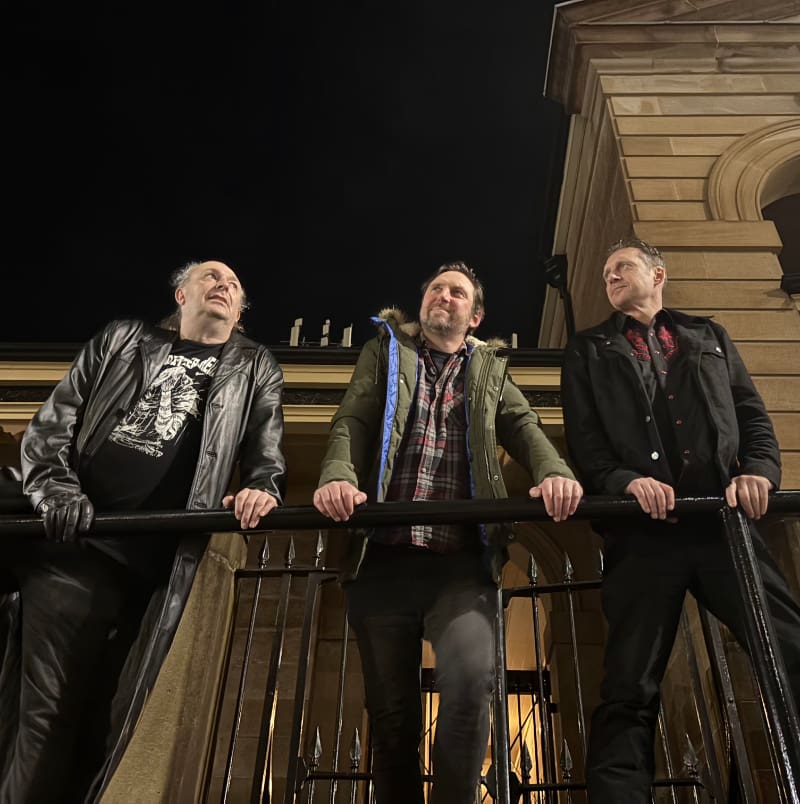 SharkArm. Rachel Cullen photo
Sydney skuzz rockeers t SharkArm have been gigging for years with an album and two singles to their credit. The big news for locals is that they're bringing Queenslanders Gravel Samwidge, and Sotu Australians Molly Fet Circuit for gigs at MoshPit (August 15 from 2.30pm) and The Link and Pin in Woy Woy (August16.)
SharkArm haven’t fronted the Bar for an interview so this seemed like a good reason for Robert Brokenmouth (who plays in Molly Fet Circuit) to ask a bunch of questions. SharkArm are Damian Iowa (drums), Nathan Iowa (guitar and vocals) and Josh Shipton (bass.)
- Details
- By Robert Brokenmouth
- Hits: 1676
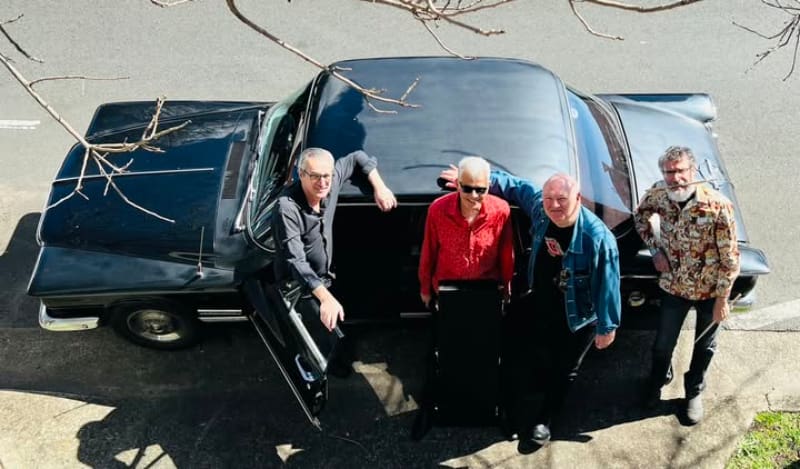 The MacGuffins. Alison Breen photo.
Lachlan Colquhoun is a writer, editor, publisher, bass player and anarchistic ne'er-do-well. Adelaide expat cum Sydney-ite, currently with Sydney outfits The Flippin' Kick Outs and The MacGuffins.
You might not have heard of Lachlan Colquhoun. On the other hand, if you're an old fart sitting at home with the bowl of corn chips barely balanced on your belly while you suck a stubby through a straw, you might remember him from tumultuous, inebriated nights in the 1980s and ‘90s when Sydney was crowded with bands, possibility and sub-tropical steam, even more crowded with thirsty punters.
If you know the music world, essentially everyone in this country is a minor player. Why? Because it's Australia, and while we may think we're something special, overseas, no other bastard does. So, like Iva Davies or Daniel Johns or even that bloke from Men at Work, while between jobs which pay a fuck of a lot better than being a musician.
- Details
- By Robert Brokenmouth
- Hits: 1153
 Samwidge is served: Declan Bradbury Mark Spinks and Alex "Sleepy" Morrison. Photo by Calan Stanley
Rejoice, Sydneyites, because Gravel Samwidge are extracting themselves from their Brisbane base and heading down your way for some sonic shenanigans.
For those unfamiliar with Gravel Samwidge, here's the basics: They are Declan Bradbury on bass, James Cassidy on guitar, Alex “Sleepy” Morrison on drums; and band leader Mark Spinks on guitar and vocals.
But before any more, a little heresy. When I was a young lad I absolutely loved The Scientists (first and second versions). It's forgotten now, but the second mark were often scorned and verbally abused outright. They simply didn't fit: noisy, fuzzy, feedback-y. And, especially, all that horrible long hair which, for rock 'n' rollers, had gone the way of the dodo during the late 1970s.
- They Will Persaude You: Huxton Creepers are back for more than 12 Days this time
- Hard rocking in Hollywood: Alon Delon's time on The Strip
- Twist in the tale: Dave's remarkable look back on glam and punk
- Sawdust Memories are made of this: A Joeys Coop track-by-track with Mark Roxburgh
- Conversation with a sick man
- Mudhoney's Guy Maddison has a Fancy Weapon and he knows how to use it
Send us stuff to review
PO Box 334
Oatley NSW
2223 Australia
Get in touch: barman@i94bar.com
The Living Eye

I-94 Bar presents
Chris Masuak’s Dog Soldier
“The Shiny Side Tour”
OCT
23 - Link & Pin, Woy Woy, NSW
+ The Dunhill Blues
Tickets
24 - Marrickville Bowlo, Marrickville, NSW
+ Fuck The Neighbours
+ The Stallers
Tickets
Negative Approach (US)
Australian Tour
OCT
21 - Lynott’s Lounge, Perth, WA
22 - Ed Castle, Adelaide, SA
23 - The Tote, Melbourne, VIC
24 - Singing Bird Studios, Frankston, VIC
29 - The Baso, Canberra, ACT
30 - La La La’s, Wollongong, NSW
31 - The Chippo, Sydney, NSW
NOV
6 - Vinnies Dive Bar, Southport, QLD
7 - The Brightside, Brisbane, QLD
8 - Black Box Theatre, Nambour, QLD
Tickets
Troy Tempest
Ace Traffic Reporter
presents
"Apocalypse Mayhem 2026"
The Dark Clouds
+ Slack Punks
+ Van Ruin
+ Kung Fu Grip
+ DISGRACELand
MoshPit, St Peters, NSW
- Oct 23
Tickets
Shonen Knife (Japan)
“Re-cuttin’ Australia/NZ 2026”
OCT
15 - Volta, Ballarat, VIC
+ Moler
16 - Sooki Bar, Belgrave, VIC
+ Moler
17 - Croxton Block Party, Melbourne, VIC
18 - Altar, Hobart, TAS
21 - Milk Bar, Perth, WA
+ Turnstyle
22 - The Gov, Adelaide, SA
+ Moler
24 - ZED51
Roma Street Parkland, Brisbane, QLD
w/ Mudhoney
+ Custard + The Mark Of Cain
+ Cash Savage & The Last Drinks
+ Tape/Off
25 - Alice Springs Brewing Co,
Alice Springs, NT
28 - The Baso, Canberra, ACT
+ Turnstyle + Media Puzzle
29 - Crowbar, Sydney, NSW
+ Turnstyle + Media Puzzle
30 - Keystone 1889, Bathurst, NSW
+ Turnstyle + Media Puzzle
31 - Avalon RSL, Avalon Beach, NSW
+ Turnstyle + Media Puzzle
NOV
1 - King Street, Newcastle, NSW
+ Turnstyle + Media Puzzle + Nursery Crimes
24 - Trash Cult, Eaglehawk, VIC
7 – 8 Tidal Sounds Music Festival
w/ Hard-Ons, Bodyjar, The Porkers,
Youth Group, The Grogans + Peach Fur and more
Hoey Moey, Coffs Harbour, NSW
New Christs
NOV
21 - The Brightside, Brisbane, QLD
+ Suicide Country Hour
+ Mick Medew & The Ursula 4
The Bawdies (JP)
“This Is The Party” Australian Tour
6 - Factory Floor, Sydney, NSW
+ PocketWatch + Jupiter 5
7 - River Rocks 2026, Geelong, VIC
8 - Bergy Bandroom, Brunswick, VIC
Tickets
Joeys Coop
NOV
29 - Junk Bar, Brisbane, QLD (arvo)
The Cribs (UK)
"Selling A Vibe" Australian Tour
OCT
4 - 170 Russell, Melbourne, VIC
5 - Factory Theatre, Sydney, NSW
6 - The Triffid, Brisbane, QLD
8 - Rosemount Hotel, Perth, WA
Mudhoney
Australia-NZ 2026
OCT
16 - The Thornbury Theatre, Melbourne VIC
17 - Torquay Hotel, Torquay VIC
18 - Theatre Royal, Castlemaine VIC
20 - Volta, Ballarat VIC
21- Felons Barrel Room, Manly NSW
22 - Factory Theatre, Sydney NSW
23 - King Street, Newcastle NSW
24 - ZED 51, Brisbane QLD
25 - The Northern, Byron Bay NSW
28 - Blue Smoke, Christchurch NZ
29 - Meow, Wellington NZ
30 - Totara St, Tauranga NZ -
31 - Harbour Hotel, Raglan NZ
NOV
1 - Double Whammy, Auckland NZ
The Exploding Universe of Ed Kuepper
Ed Kuepper 50 Years Retrospective
RESCHEDULED
OCT
29 - Avoca Theatre, NSW
30 - Canberra, The Street Theatre, ACT
31 - Wombarra Bowlo, NSW
NOV
4 - Adelaide, The Gov, SA
5 - Melbourne, National Theatre, VIC
6 – Geelong, Barwon Heads Hotel, VIC
7 - Sydney, Factory Theatre, NSW
(matinee & evening shows)
13 - Fremantle, Freo Social, WA
15 - Brisbane, Princess Theatre, QLD
Tickets
Reverend Horton Heat (US)
Australian Tour
NOV
11 - Crowbar, Brisbane, QLD
+ The Linelockers
+ Jake & The Cadillacs
+ DJ Lori Lee
12 - The Gov, Adelaide, SA
+ The Satellites
13 - Factory Theatre, Sydney, NSW
+ The Johnnys
+ Pat Capocci
14 - Croxton Bandroom, Melbourne, VIC
+ The Johnnys
+ Ezra Lee & Jumpin' Jethro
15 - Theatre Royal, Castlemaine, VIC
+ The Johnnys
Hoodoo Gurus
"Rewind Tour - All Killer, No Filler"
+ Ratcat
+ The Stems
NOV
28 - Hindley Street Music Hall, Adelaide, SA
DEC
1 - Ice Cream Factory, Perth, WA
5 - Tumbalong Park, Sydney, NSW
6 - Royal Botanic Gardens, Melbourne, VIC
11 - Fortitude Music Hall, Brisbane, QLD
16 - Odeon Theatre, Hobart, TAS
The Saints 73-78
UK Tour with The Damned
NOV
25 - Brighton, Dome
27 - London, British Airways ARC
28 - Bristol, Beacon
30 - Manchester, Academy
DEC
1 - Newcastle, O2 City Hall
2 - Derby, Vaillant Live Derby
5 - Birmingham, O2 Academy
The Saints 73-78
Australian Tour
JAN
21 - Newcastle, King St
+ Chimers
22 - Sydney, Metro
+ Antenna
23 - Wollongong, Waves
+ The New Christs
29 - Brisbane, Tivoli
+ Tape / Off
30 - Gold Coast, Miami Marketta
+ Mick Medew & The Ursula 4
FEB
2 - Perth, Astor
+ Last Quokka
4 - Barwon Heads, Barwon Heads Hotel
+ dB4
5 - Melbourne, Croxton
+ Public Figures
Public Image Ltd
Australia and NZ
JAN
20 - Auckland, Powerstation
22 - Brisbane, The Tivoli
23 - Sydney, Enmore Theatre
24 - Melbourne, The Forum
26 – Adelaide, The Gov
28 - Perth, The Astor
"Superpussy 2"
The Supersuckers
+ Nashville Pussy
+ Nine Pound Hammer
FEB 2027
18 - Crowbar, Brisbane, QLD
19 - Mo's Desert Clubhouse, Gold Coast, QLD
20 - Crowbar, Sydney, NSW
24 - Ed Castle, Adelaide, SA
26 - Barwon Club, Geelong, VIC
27 - Croxton Bandroom, Melbourne, VIC
28 - Young Street Tavern, Frankston, VIC
Respect The Rock Australian Tour
The Hellacopters + Gluecifier
MARCH
17 – Brisbane, The Triffid
18 – Sydney, Manning Bar
19 – Melbourne, The Croxton
20 – Adelaide, Ed Castle
Tickets
Fresh Reviews
-
Kennedy's Collaborations bear fruit
04 October 2026
-
Easy Action delivers another Stooges hit job
29 September 2026
-
The prank's on Mark E. Smith (but he's having the last posthumous laugh)
28 September 2026
-
It's not too late to take a chance on Perth's Volcanics
20 September 2026
-
This man needs to be Instutionalised
19 September 2026