WORDS: ROBERT BROKENMOUTH
PICTURES: THE BARMAN
Some myths should be forgotten. As an AFL-denier, Melbourne's St Kilda/Collingwood rivalry has always smacked of juvenile footy gibberish. Besides, Sacred Cowboys were no strangers to Collingwood back in the day, and what was then remains then (and that's Zen) and what was then is certainly is not now (and that might be Zen, too).
Then and now, from my own window Sacred Cowboys still embody so many of the varied aspects of Melbourne culture - their performance of “Nothing Grows In Texas” on an industry-led TV show I loathed (yet watched religiously), “Countdown”, showed them successfully crossing Melbourne's apparent “dividing rift” - as did The Models.
Some myths should be rediscovered, dusted off, celebrated and redressed, and we should dance with them around a maypole.
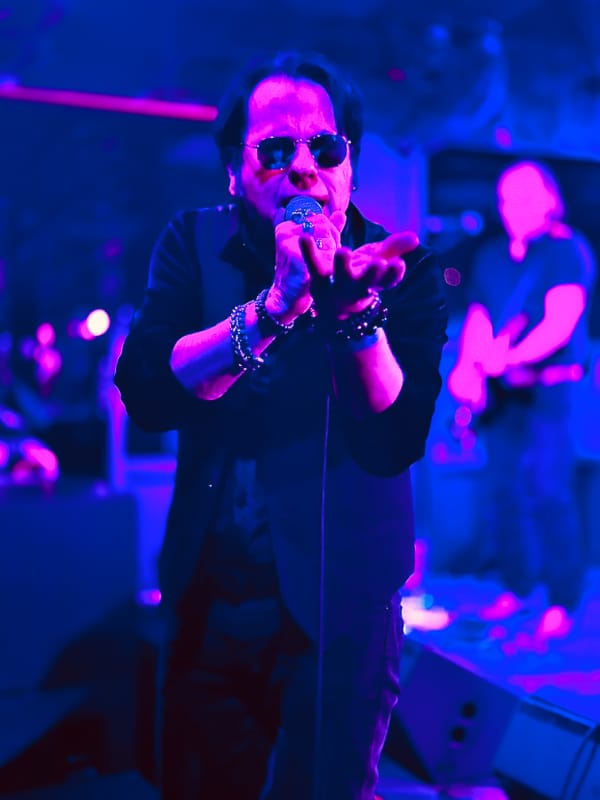
Welcome back, Sacred Cowboys. After several line-ups, they've produced “In The Manifesto, another snarl of contempt from the inner city to the red dust, to the tropical jungles, and to the north where the Big Wet drenches our appallingly anti-human country.
But it's the manner of the band's expression, frontman Garry Gray's lucid drollery and his use of the all-too-familiar, his understanding of our wretched human condition given our paucity of choices, which have always propelled Sacred Cowboys far beyond the mundanities of mucky, slobbery love songs or patronising chest-beating “we're heroes cos we fight the system” sport-stadia claptrap.
One thing which leaps out at us from “In The Manifesto” is how familiar - if not inevitable - the band sounds, with elements reflecting Australian music from the late 1960s to the '90s. Opener "Said the Spirit" gives the lie to our country's absurd censorship laws while making the obvious observations using familiar phrases and . As the man says, “your world is dying/ as a new world struggles to be born/ now is the time for monsters”.
The album is laidback but powerful, groovy and up-beat where you don't expect it. Garry's ability to face our world, understand it, and flip it back to us in such a prism that ... well, our blurred vision clears somewhat, let's put it that way. Also, his vocals vary significantly from song to song - it's hardly one-dimensional.
I'd pay to see Sacred Cowboys at some vile stadium like the Lead Slaver Arena (doesn't every city have one?), they'd be ... not so much a a breath of fresh air but a thorough scrubbing with ammonia and Listerine. If you get a chance to see Sacred Cowboys - take it. Rediscover your inner human (you know, the one that used to enjoy good music).
After listening to “In The Manifesto” a number of times, and noticing increasing crowd activity over the last year or more, I decided to interview Garry Gray. Though the interview was conducted via e-mail, I found him in impossibly ebullient form; it was impossible for me to read his responses and not hear his laughter and good humour - even though, as usual, he wears his sardonicism on his epaulettes.
I-94 Bar: There's been a huge uptick in Sacred Cowboys activity in the last couple of years - what's been happening?
Garry Gray: The Sacred Cowboys was always "an idea" first and "a rock band" second, and somehow this has always resulted in album projects and live shows that are described as "a wild, dangerous, and completely unique brand of rock'n'roll". I’m always at the centre of this, obviously, so it is amusing sometimes to read about "splitting up" and "reforming" when I know that over the years, since we never split up and therefore never reformed, that it was always aligning the planets and the stars for the next project which was the pattern behind everything. As time has passed, collaborators and friends have passed away. At the end of the day, I have no intention of leaving myself and to then be obliged to reform myself.
The past decade has seen two non-Sacred Cowboys projects. The first was Garry Gray & The Sixth Circle and the "Diamond in the Forehead" album with Tex Napalm, Spencer P Jones, Angela Howard, Graeme Ward, Rob Wellington, and Chris Taranto. The second was "We Mainline Dreamers" with Ed Clayton-Jones.
Two years ago, I put together a 2xCD anthology called "Cowboy Logic" which had studio tracks from previous Sacred Cowboys albums, and the albums just mentioned, as well as a bonus live disc from the 1990’s dating back to when Spencer P. Jones joined the group.
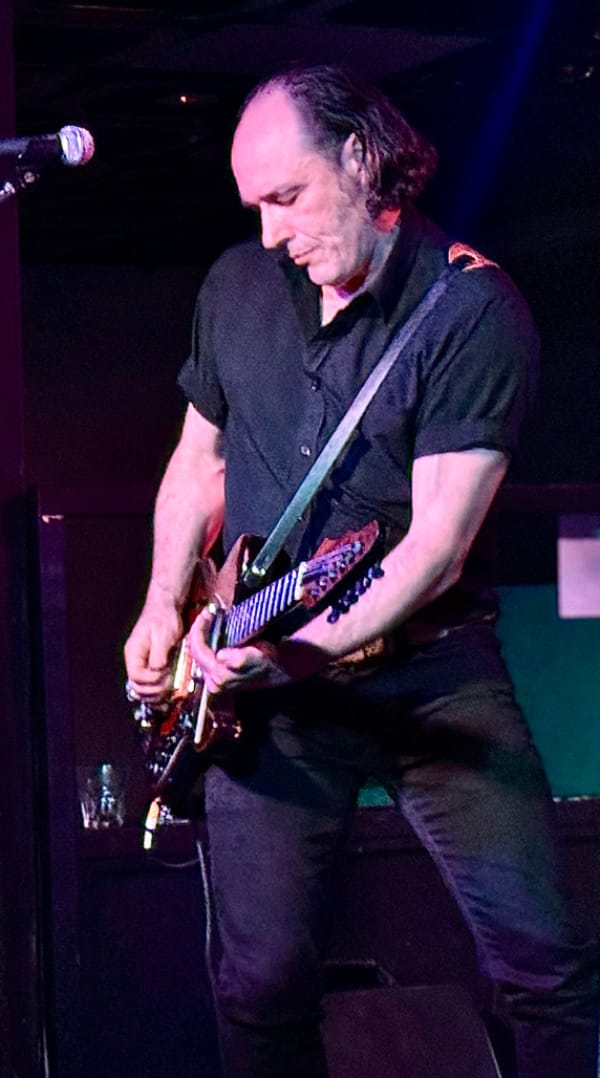 Tim Deane.
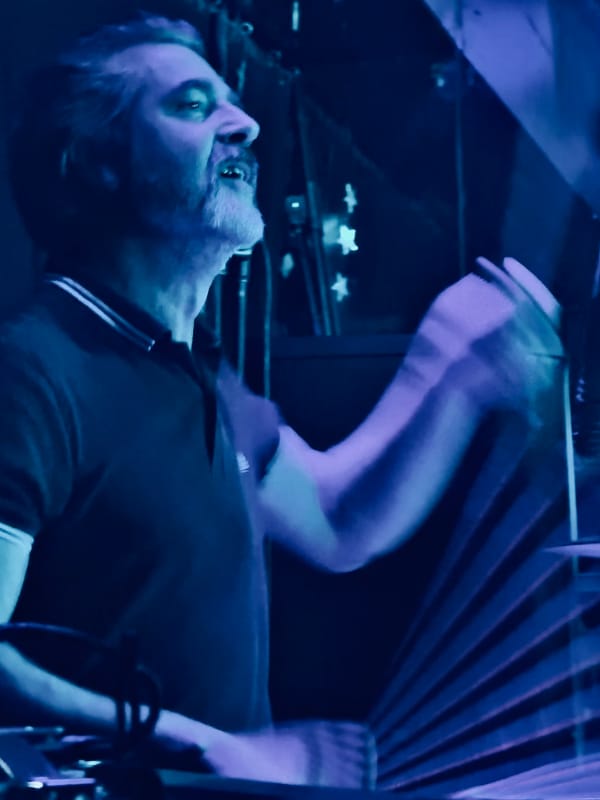
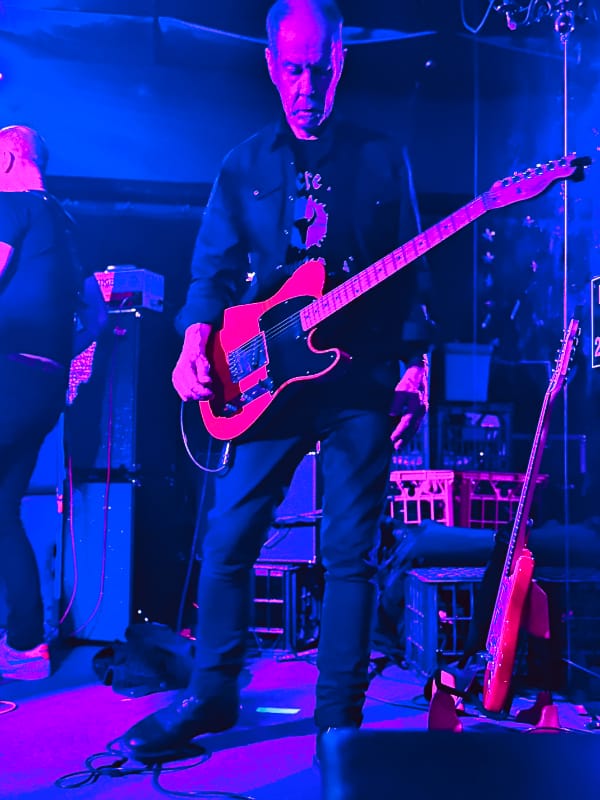
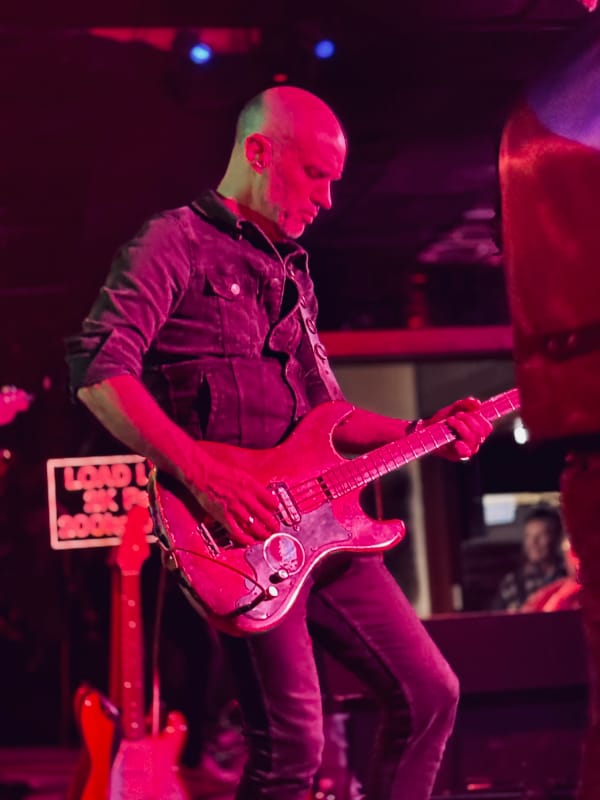
Making "Cowboy Logic" accidentally coincided with (co-founder) Mark Ferrie having found three gentleman legends, Tim Deane, Anthony Paine, and Damian FitzGerald, who were in their own band together - but said Yes to doing a few Sacred Cowboys shows.
Fairly classic story; we quickly discovered our reinterpretation of Cowboys back catalog packed a real punch, and that we were easily able to write together - I wrote songs with everyone in the group which resulted in our new album, "In the Manifesto", which is on Beast Records in France and Torn and Frayed Records in Australia. So, we are a new band with an extensive back catalogue.
I-94 Bar:To me, your lyrics seem both clear and yet imply multiple other meanings. Your method of writing a song must be quite extraordinary - is there a method? What do you look for? I recall us talking about how you wrote "Eight Dragons", for example, and some of the songs on that first Sixth Circle EP. I know you edit the words that come out first - what do you aim for? Or would you rather not explain?
Garry Gray: The first part of your question is on the money. Lyrics that are "clear and yet imply multiple other meanings". The method is driven by the context I am writing in, so this means there is no single method or methodology and that I adapt the approach to the writing of lyrics to the object-in-mind and if there is a soundscape I am immersed in, then that works as an emotional or mental driver shaping the lyrics. So perhaps that's like saying "here’s the special sauce but no recipe for it", but I reckon that’s enough.
If you haven’t listened to Patti Smith and read her literary influences - as just one example - you might not crack the code. Lyrics can be unknown and in another language with the intent always being felt in the song. I’m a musician, so that impacts not only on how lyrics are written but on how they feel to myself and to the listener when communicating via song. Something beyond the words is and should be expressed.
And, no, I don’t look for anything - I’m just observing, interpreting - "it" finds me.
 Damian FitzGerald.
I-94 Bar: I've seen some singers use lyric sheets or pads of some description when they're onstage - Sinatra, Johansen, Lee Ving. Some of your songs are pretty wordy - how on earth do you remember all the bloody lyrics?
Garry Gray: I rehearse. And with regard to Frank, I don’t yet need an autocue. I might reconsider if I land a residency at The Copa Room at The Sands in Vegas.
I-94 Bar: The first time I saw the Sacred Cowboys - I was a late developer - was the first of this new incarnation, when some local character was on his knees worshipping you. Alcohol is, of course, a wonderful thing, and I'm sure this was a one-off - but how do you cope with being recognised by strangers in the street, in coffee bars and record shops?
Garry Gray: It is truly good for you to find yourself deep “In the Manifesto”, Robert. Welcome. I am sure you have noticed that folks can be a little “tin foil hatty” these days. When folks have that reaction, you just accept it. When people understand that we are all ‘In the Manifesto,’ they may take my hand or fall to their knees and look up to the sky for a warning.
I-94 Bar: You recently revisited St Kilda - the Seaview Ballroom, Acland Street, Bath Street ... and I know all sorts of memories came flooding back. Could you share a few with us?
Garry Gray: Just at the weekend I was asked about the Crystal Ballroom days, and I recalled that I had a room there in 1983. Our drummer Johnny had the room next door to mine, and upstairs there was a ghost who passed by me one night, entering the elevator in the lobby.
Anyway, the Cowboys had just returned from a Sydney tour, and we had a 3RRR live to air at the Wintergarden Room upstairs [in the Crystal Ballroom] that night. I remember going downstairs from my room in my red kimono to sound-check. I had my Cornflakes while the guys were tuning up. I loved playing the Ballroom.
The first gig from the “Lethal Weapons” stable played there; The Negatives (Gray's pioneering punk band) headlined and our pals The Boys Next Door playing support. The show was organised by a friend of mine during an afternoon of drinking in the seedy downstairs bar. She asked (publican) Toddy if her friends could do a show there. He agreed. This pre-dated the Dolores San Miguel (legendary venue booker) era - it was just a one-off event.
Sadly, there is a lot of historical revisionism at play surrounding the Ballroom. If you were there and had a good time, be content with that instead of engaging in mountain-style Clampett vs Drysdale hillbilly feuding and all the sad legacy badge chasing. Rear view mirror, "Thank you, please!" - and if you know who I quoted then, you were there.
I-94 Bar: A shame no cinematographer was there to capture it all. I mean, we all know everything changes, but the past seems always within us, wriggling just beneath the surface. Is that the case with you, too?
Garry Gray: I live very much in the now, Robert, so I don’t agree about it being a shame that there was no-one to film it. With mobile phones that seem designed to perform unkind photography and create music clips with appalling sound quality in a blurred and obtuse distortion of reality, it is better to dream, I reckon.
The past is over, Robert. It is not with me. Over the years moments in time have been recorded in the form of the work that I have done as a writer and musician. As you know, Sacred Cowboys are a Melbourne-based Australian post-punk and rock band formed in 1982 by Garry Gray (ex-The Reals, The Negatives) and Mark Ferrie (ex-Models, RockWiz Orchestra).
The Sacred Cowboys have issued seven albums: “Sacred Cowboys” (1984), “We Love You ... Of Course We Do” (1985), “Trouble from Providence” (August 1988), “Things to Come” (July 1996), “Cold Harvest” (January 2007), “1982–85: Nailed to the Cross” (February 2008) and “In the Manifesto” (March 2026). They have also released two EPs and seven singles. Sacred Cowboys albums have been released in Europe and Australia since 1984.
We launched “In the Manifesto” in Australia in February, playing shows in and around Melbourne and Sydney. In July, we fly to France to play the Binic Festival, and the Beast Records Festival and other shows in France and Spain - so the past is not getting any airplay chez moi.
I-94 Bar: I have noticed a large surge in people under 30 going out to gigs again, making the places seem really exciting. Discovering stuff for the first time - like Local High School Students Play The Velvet Underground - and that is brilliant. What are the “negatives” (ahem!) of being in a band these days, and what are the positives?
Garry Gray: Being in a band has not changed. It is great. There is always a sense of discovery in creating music. Though I would have to say that with several albums, tours, hundreds of shows, rehearsals and songwriting experiences with a number of brilliant artists under the belt, a person ought to be finding that the creative side and playing live more than an excellent thing to be engaged in, in the present moment, and be tapping into a deep vein of savoir faire, n’est ce pas? - and loving it.
Meeting new bands coming through is also a buzz. We played the Singing Bird in Frankston recently. The opening band, The Military, were 20-year-olds doing their first-ever show and already displaying eclectic brilliance and verve beyond their years and it was really cool to see them up the front dancing and digging our set later.
I-94 Bar: There are some serious chops in this incarnation - how did you assemble them? What does each bring to the band?
Garry Gray: Very jazzy. Okay, yes, “chops” but I’d have to exalt the “groove” as the key to it. They are human beings, not Lego, by the way. As mnejtoned, Mark found Tim Deane on guitars, keyboards and backing vocals, Anthony Paine on bass, guitar, keyboards and backing vocals and Damian FitzGerald on drums, percussion, reeds and guitar, playing around town in their own outfit called Sore Eyes about a year and a half ago - so they already knew how each other ticked.
I had seen Tim playing once before in Ron Peno and The Superstitions. Quite separate to all this, I was in the process of releasing the "Cowboy Logic" anthology. So, a kind of happy accident then, an anthology album to launch with these gentlemen if it worked out.
Mark and I were experienced at working different people into Cowboys line-ups and the guys found their own way in. Instead of a verbatim rote-learning exercise which would have been a dead bore, we leaned towards an “impressionistic approach” - this use of light and texture opened the door to us having a supple palette to work with. So it was relatively easy to spring from the back catalog into writing new material without losing continuity, [especially] as all the guys write and arrange songs in their own right and have all played on a host of albums.
I-94 Bar: You've known Mark Ferrie for a number of years now - and you've worked together over and over. Could you tell us a little about how you met, how you first started playing together?
Garry Gray: Mark and I met in Melbourne in the wake of the “Lethal Weapons” era. I was in Negatives. My pals Ash and Johnny were in JAB and Sean Kelly was in Teenage Radio Stars. Sean, Ash and Johnny became The Models. Mark was in the original Models line-up. After Negatives, I moved to Sydney briefly and I ran into Mark one day in Oxford Street and he asked me to go back to where The Models were staying as Ash and Johnny wanted to catch up.
When I moved back to St Kilda, Melbourne, Mark and I started hanging out and listening to Alan Vega and Captain Beefheart. One day he invited me to go and jam with these guys he knew.
So, it was Mark, Johnny Crash, Terry Doolan, Andrew Picouleau and Ian Forest. They were playing covers, like the Credence tune, “Run Through the Jungle” and Modern Lovers' “Pablo Picasso”. I didn’t know all the words - just made-up verses and threw in any words I knew - that’s how I started writing lyrics in Sacred Cowboys - on my feet at rehearsal and on stage and later in the early days, in the studio.
 Mark Ferrie.
I-94 Bar: And also: what is it which makes you two click so well, do you know?
Garry Gray: From the get-go, it didn’t matter what our separate musical inspirations were, though we find many common inspirations such as Vega and Beefheart and a host of others, we have as many sources of inspiration that differ widely. So, when we work together, we continue to produce things that make the playing and recording interesting as it continues to evolve.
I-94 Bar: Which came first, lyrics or music - I'm assuming the songs were worked up and out in rehearsal?
Garry Gray: There is and was no one-size-fits-all response. Some songs were written by say, Anthony sending me MP3s and me either writing something spurred by that, or having an idea that would fit with the music sent. Sometimes I sat down with a lyric and Damo with an acoustic, or file-sharing with Tim or Mark. Sometimes a riff from a jam on stage or in the rehearsal room and I’d have part of a lyric written or a more complete idea …
I-94 Bar: There's a serious mid-1960s-early ‘70s vibe going on here, with a sort of droll laid-back savagery. What the hell is going on - there's far more than meets the eye going on here - so was there an intended unified concept, or did it just pan out that way?
Garry Gray: As I have said – we all listen to a wide array of music. Also, with the guys and Mark and I working through earlier material somehow reconnected us to the era we started listening to music in, though for some of us the era we are talking about was something that some of the guys had to visit from the future and for others the '70s was when we came of age. It’s like we dig '60s garage, Beefheart, the '70s stoners like Company Caine, Jesus and Mary Chain and so many more - up to now - anyone not toting a bible and a gun is welcome - the connecting thread part, the intended and unified concept is deliberate on my part.
I-94 Bar: Surely no song ends up being recorded the way it was originally envisaged - is that the case here?
Garry Gray: I would say songs are written, played by musicians, recorded, mixed and mastered. You need to know what you are doing and where you are going and where you want to land and, importantly, to have things land in the write place each and every step along the highway.
I-94 Bar: “The Psychedelic Shooter” is, frankly, menacing What sparked this one?
Garry Gray: This is "droll, laid-back savagery" at work. You wake up a nobody in a post-hero world and you want to strike down someone’s enemy, but you can’t shoot straight. Now it’s too late and you’re in too deep and it’s too late to believe in yesterday ... you’re in the manifesto.
I-94 Bar: I'm reluctant to single out too many songs that I'm curious about - but could you amplify “Zero Gravity” a bit, please?
Garry Gray: I’d much rather you got into the songs, all you writers out there … I indulged you with “The Psychedelic Shooter”. We need you writers to resurrect the spirit of Lester Bangs and get in there and use your literary skill sets to get serious with the albums you review and be ready to call the lame lyric or ask questions and call out pedestrian song writing efforts. What does the song do to you? What does “Zero Gravity” make you feel?
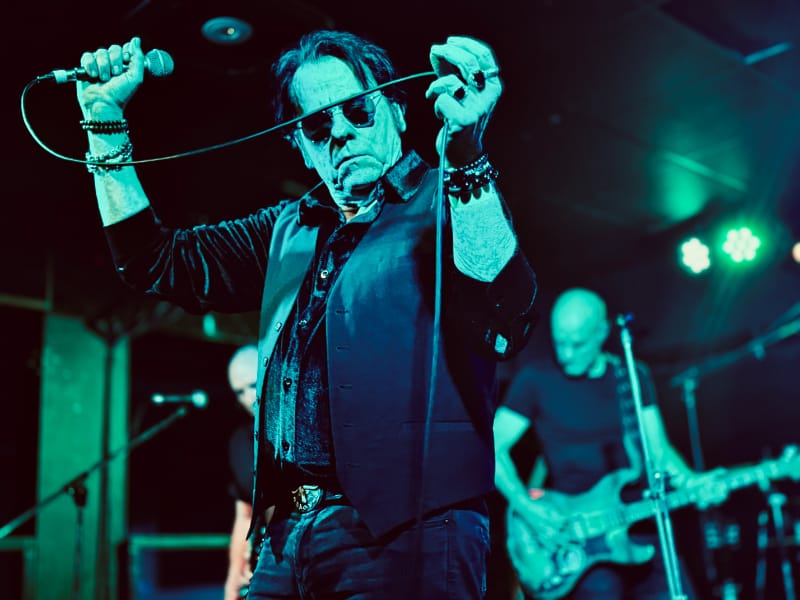
 Anthony Paine
I-94 Bar: Brevity and precision in expression - it's as if you want to bang our front door with the song - and then, having got our attention, scarper, leaving us wondering. Was it a conscious decision to keep most of the songs under four minutes?
Garry Gray: Our cover of Company Caine's “The Day Superman Got Busted” I think clocked in at nine minutes the other night - and we have thought about doing an album of half a dozen long songs next time - but not for any reason connected to this record.
During the months we were writing this album, amongst other things, I was listening to Sonic Youth's “Rather Ripped” often, and [their song] “The Diamond Sea” [on] “Washing Machine” I got interested in the idea of the precision of “Rather Ripped”, which was a big departure, and indeed when honing arrangements with Tim it seemed logically right for our songs to go the way they went - but our song “Split” is definitely us in another dimension - how we let songs unfurl. But that’s shooting the breeze – our guiding principle is that we do what we do for the song, so it’s quite likely we will inhabit a different world next time, but the songs will do what we consider they need to do.
I-94 Bar: You've been playing occasional live shows - I know they've been received well, but what sort of feedback are you getting after the gigs? What are people saying?
Garry Gray: We’ve been playing a lot actually - every month really - and since the launch as well and as I said earlier, getting ready to play in Europe. People say all sorts of things, Robert. We've had diehard fans of the original line-up getting 'in the manifesto' with us and being enthusiastic about the new album. People love the live shows, and we are starting to meet new people each time.
I-94 Bar: You've had some time to reflect on the LP now - which songs are you most pleased with?
Garry Gray: I am pleased with everything about the album, Robert. I love all of the songs. I have a rotating list of fave tunes. This week it’s “Ambient Brain” and “Kool Aid on the Rocks”, last week it was “The Psychedelic Shooter” and “Failsafe”.
I-94 Bar: While I know so many of your songs have been inspired by what you see around you - I confess that over the years several have, for me at least, had the air of prophecy about them. Have you noticed that too, or have I been at the fermented pineapple juice too often?
Garry Gray: There are many reasons that human beings write. I started listening to music in the era of the singer songwriter and the tumultuous era of the Vietnam War. So I’m one of those people who prefer the astute take on existence rather than the cozy comfort food crapola music that you need make no effort to consume. When people use their intelligence to comprehend the world around them I often think they might seem prophetic or even political - when all they're really doing is analysing what is happening around them rather than reacting by bouncing off the next delusional state of mind.
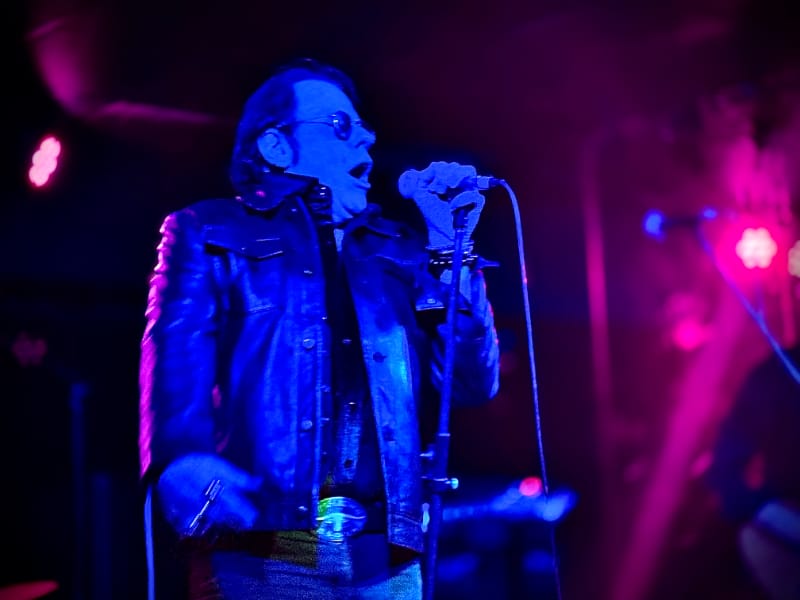
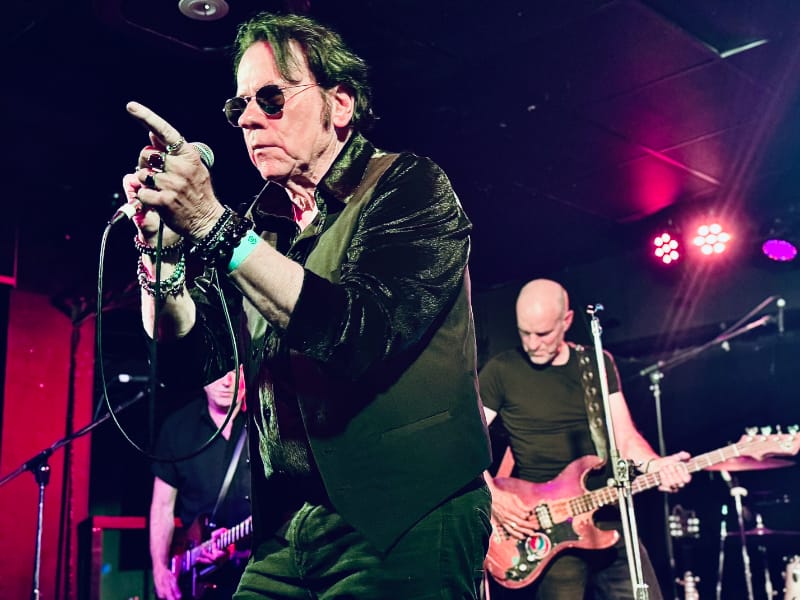
 Garry Gray
I-94 Bar: Lastly, if I kinda squint my ears and sorta get the Bandcamp description, "Channelling a Sonic Youth ethos and grinding the gears in the engine room of the Cosmos Factory" ... I gotta say, I don't hear either SY or Creedence at all, Garry. Hell, “Blast Radius Blues” reminds me more of my favourite Clash LP “Sandanista”. Were SY and Creedence really uppermost in your creative palette for these songs - or were other bands lurking in the undergrowth?
Garry Gray: The band's name was inspired by the Sacred Cows from an episode of the 1960s TV show “Get Smart”. The Sacred Cows were used by The Groovy Guru - G.G. - to transmit a subversive manifesto into the minds of America’s youth. Looks like the plan worked.
Reflecting on our iconoclastic approach that rejected genre labels, fashion trends, and commercial hype in favour of boundary-pushing rock music. Early on, we established our stylistic roots through covers of influential artists, including Creedence Clearwater Revival's swamp-rock grooves - and also check the recent John Fogerty interview in which he discusses the craft of songwriting - it goes way beyond any opinion you would currently have linked to Credence - and very much in the way of how we think about songwriting...
Alex Chilton's “Bangkok” for its eccentric pop edge, The Velvet Underground's avant-garde minimalism, Captain Beefheart's surreal blues, Suicide's electronic proto-punk, and Bob Dylan's folk introspection, which collectively shaped our gritty, eclectic aesthetic.
From our debut performances in 1982, the Sacred Cowboys cultivated a reputation for confrontational live shows defined by raw energy and deliberate audience provocation, often escalating into chaotic interactions that amplified their post-punk ethos of rebellion and immediacy - and here we speak of our ethos - akin to the mindset of Sonic Youth - more applicable to my lyric writing but essentially close to my attitude at the interface of being a musician and what you believe in and what you will do with that.
This intensity was bolstered by affiliations with independent labels like White Label (an imprint of Mushroom Records) and New Rose Records, Bang! Records and Beast Records and Torn and Frayed Records …. which provided platforms for our unpolished, gritty sound and allowed us to maintain artistic autonomy in a landscape dominated by mainstream acts.
Beyond all of that sea of categorisation - and referencing - stands a band of musicians called Sacred Cowboys - each band member bringing a wealth of experience and individuality to the table - together “In the Manifesto”, providing the people with one of the best Australian albums ever recorded.